

Every educator recognises the difference between an assignment students endure and a project that pulls them out of their seats. A worksheet asking a ten-year-old to “name three endangered mammals and list their threats” produces compliance. But when two fourteen-year-old students in Devon launch a home-breeding network to rear the UK’s smallest native rodent in hollow tennis balls and release them into wild hedgerows, children do not need to be coerced into reading biology standards. They want to know the exact moisture level inside a grass nest, the nutritional requirements of weaning pups, and how hedgerow corridors prevent genetic isolation.
Here is our curated Top 5 digest from this week’s news, complete with curriculum connections, and pedagogical frameworks.
1. Youth-Led Hedgerow Rewilding: Student-Led Harvest Mouse Breeding in Devon
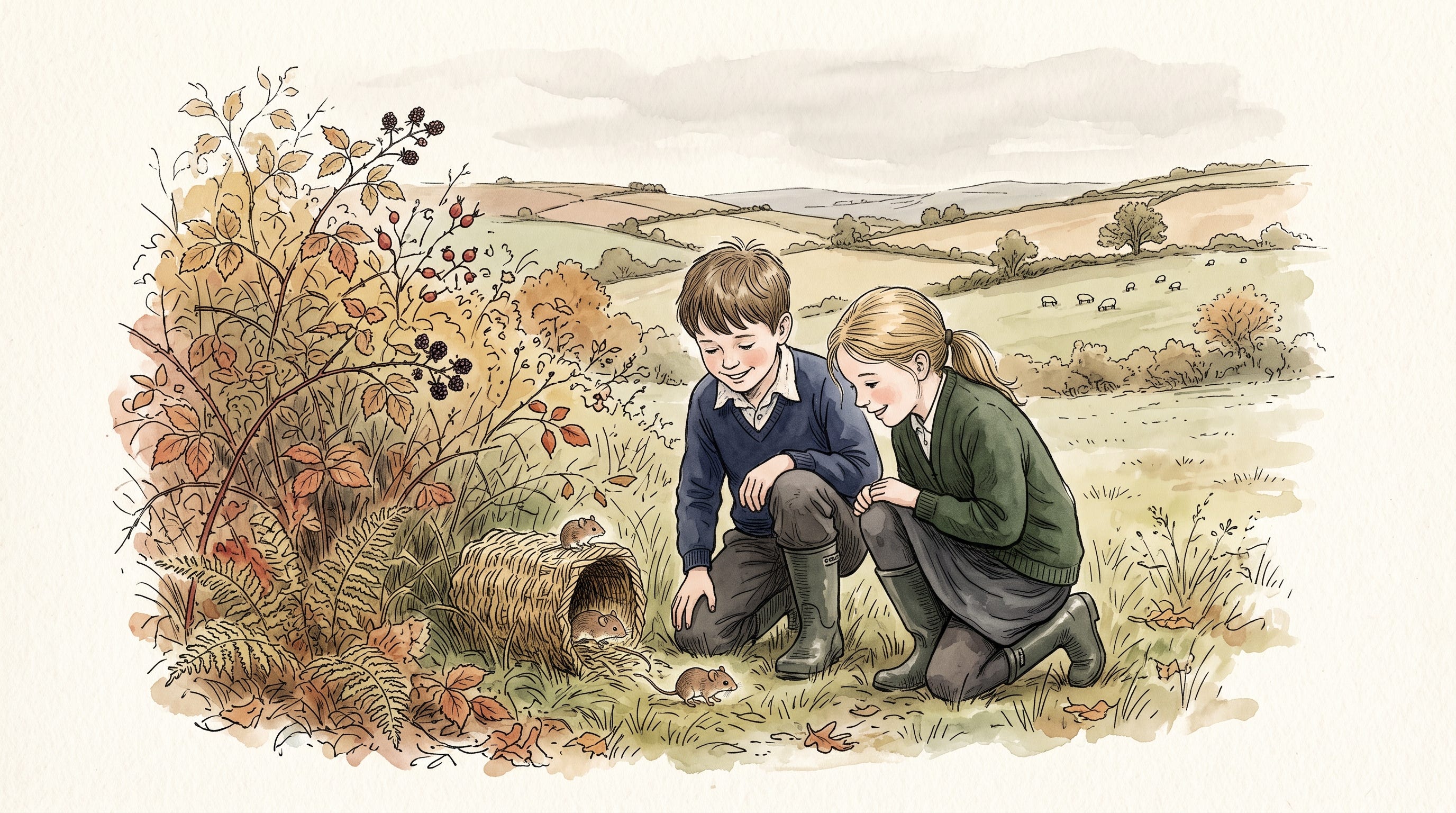
The Breakthrough: Two 14-year-old student conservationists launched a school-supported captive breeding network that provides primary pupils with breeding pairs of Britain’s smallest rodent to rear at home. Children construct nesting enclosures from hollow tennis balls and wetland grasses, monitoring breeding cycles before releasing healthy mice into wild hedgerow corridors.
Sustainability Concept: Community rewilding, youth captive breeding, and hedgerow corridor connectivity.
Curriculum Alignment: NGSS 2-LS4-1 (Observing plant and animal diversity across habitats) and 3-LS4-3 (Evaluating habitat suitability for living organisms).
PBL Driving Question: How can our class construct safe nesting boxes and grass habitats to help rear and release tiny native mice into local nature reserves?
Visible Thinking Routine (Parts, Purposes, Complexities): Have students examine the anatomy of a harvest mouse nest (woven grass tussocks suspended off the ground). Break down the parts (blade structure, weaving tension, moisture resistance), their purposes (keeping pups dry, hiding from weasels), and complexities (why intensive field monocultures destroy these specific nesting heights).
2. Canopy Wildlife Bridges: Engineering Highway Overpasses for Amazon Mammals
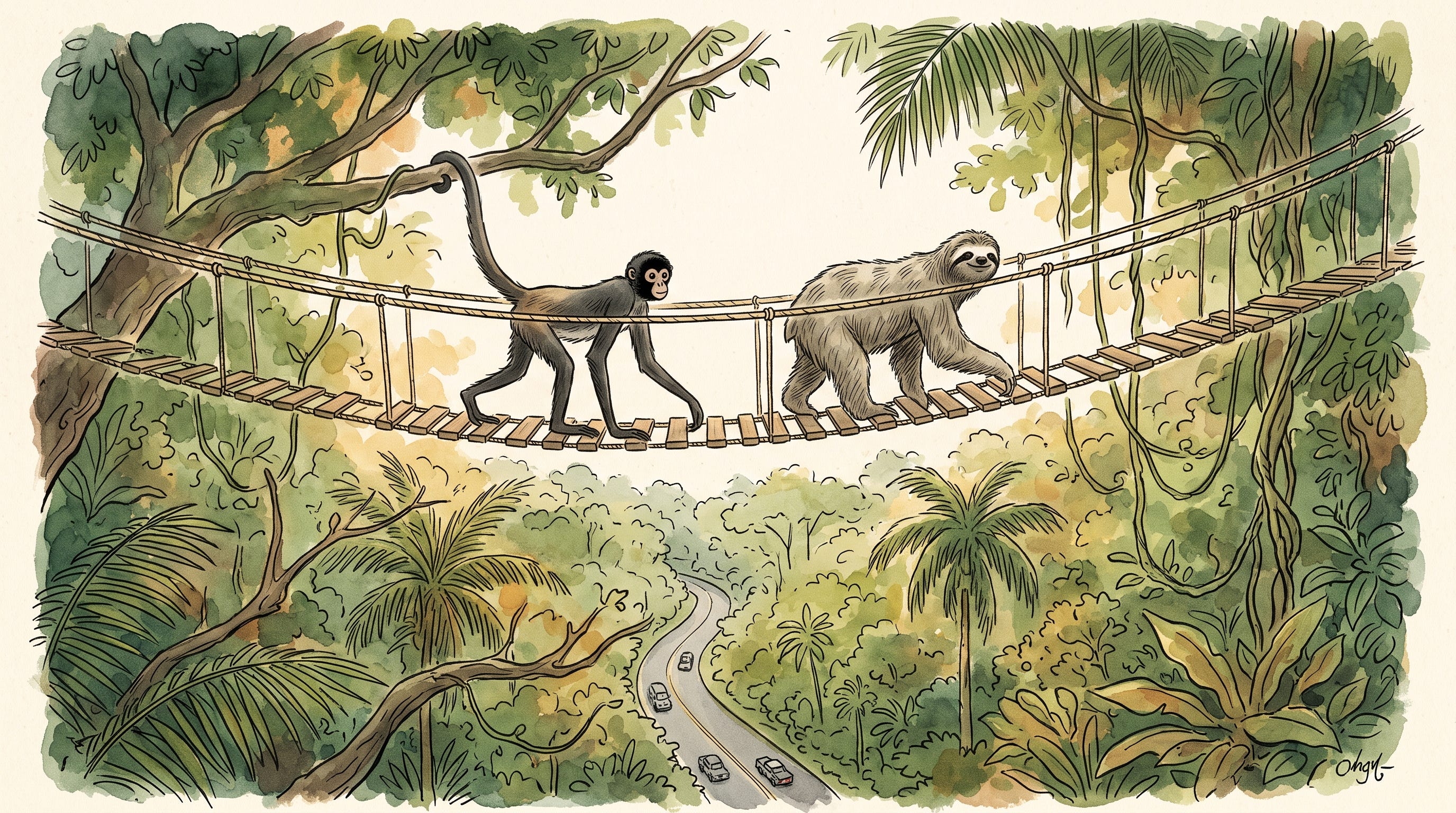
The Breakthrough: Wildlife organisation Reconecta engineered simple aerial canopy bridges suspended high above Amazonian highways, allowing monkeys, sloths, and anteaters to cross roads safely without descending to the pavement. Supported by national transport authorities, camera trap networks verify that tree-dwelling animals readily adopt the rope bridges, slashing vehicle collisions across rainforest corridors.
Sustainability Concept: Wildlife crossing engineering, canopy connectivity, and road ecology mitigation.
Curriculum Alignment: NGSS 3-LS4-4 (Evaluating solutions to environmental changes affecting populations) and 4-LS1-1 (Internal and external structures supporting animal survival).
PBL Driving Question: How can young engineers design a suspended rope bridge that lets tree-climbing forest animals cross over busy roads without getting hurt?
Visible Thinking Routine (Imagine If...): Present a satellite map showing a road bisecting a local woodland. Ask student design pairs: “Imagine if arboreal animals could cross without touching the road: what materials, anchor points, and entry heights would different species require?”
3. Island Sanctuary Success: Drone Survey Discovers 180,000 Giant Tortoises on Aldabra
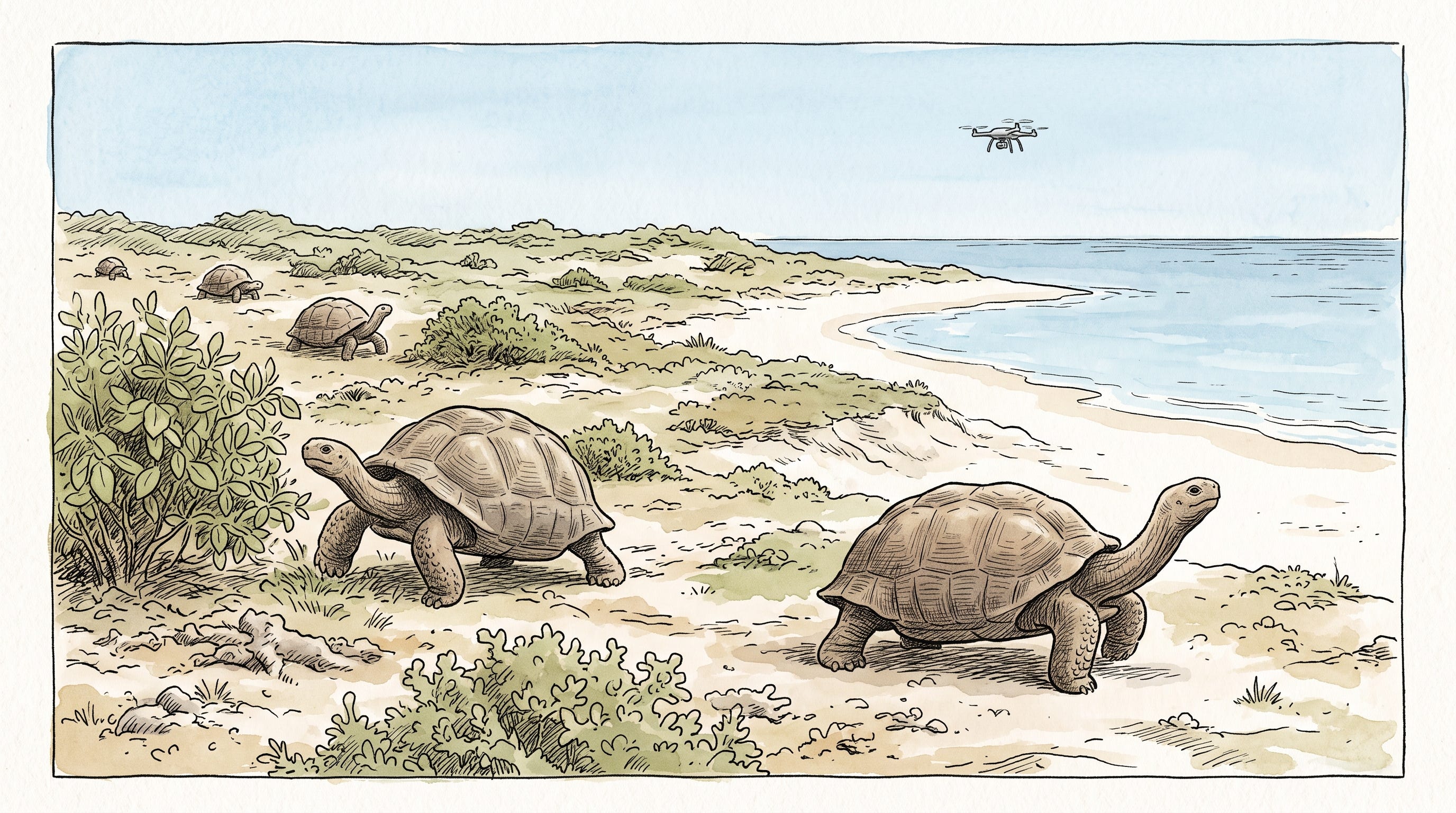
The Breakthrough: An exhaustive drone and field census revealed that the giant tortoise population on the remote Seychelles atoll of Aldabra has expanded to more than 180,000 individuals. Strict habitat protection and island biosecurity have transformed the coral atoll into a self-sustaining prehistoric reptile sanctuary with zero human interference.
Sustainability Concept: Island megafauna recovery, drone population censuses, and undisturbed biosecurity reserves.
Curriculum Alignment: NGSS 2-LS4-1 (Comparing animal diversity across habitats) and 3-LS4-3 (Habitat variations and organism survival).
PBL Driving Question: How does protecting an isolated coral island from outside predators allow giant tortoises to build healthy, record-breaking wild populations?
Visible Thinking Routine (See, Think, Wonder): Display an aerial survey photo showing hundreds of tortoises scattered across coral scrub. Prompt students: What do you see in their distribution? What do you think enables this density? What do you wonder about how biologists count animals in dense vegetation?
4. Avian-Safe Clean Energy: Painting Wind Turbine Blades to Slash Bird Collisions
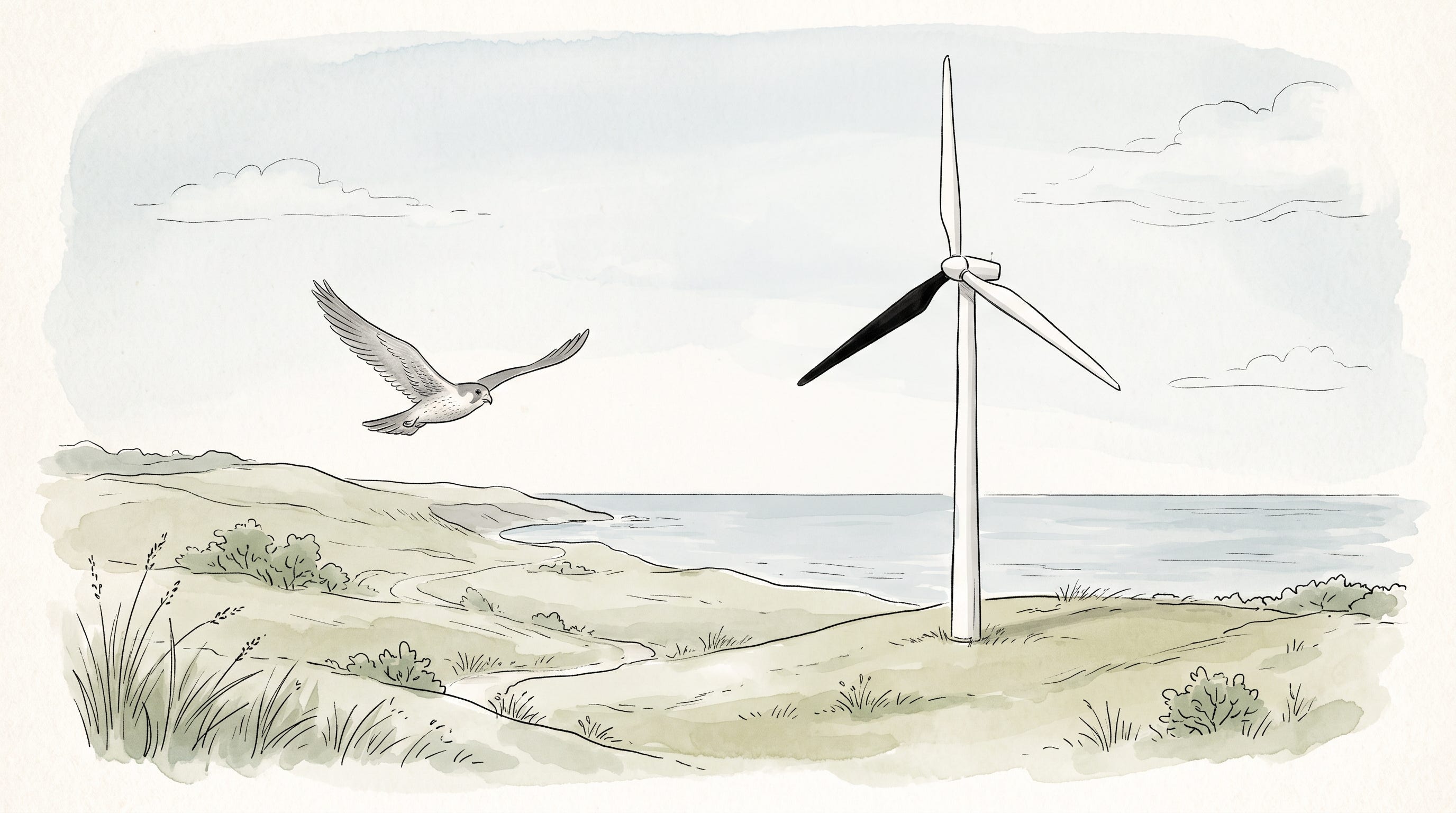
The Breakthrough: Long-term ecological field trials revealed that painting a single rotor blade of wind turbines with contrasting black paint reduces bird collision fatalities by over 70 percent. The simple optical modification eliminates visual motion smear for raptors and migrating flocks, proving that low-cost paint adjustments make utility wind farms compatible with avian flyways.
Sustainability Concept: Visual motion smear mitigation, optical engineering, and wildlife-compatible renewable energy.
Curriculum Alignment: NGSS MS-LS2-5 (Evaluating design solutions for maintaining biodiversity and ecosystem services) and MS-ETS1-2 (Evaluating competing design solutions).
PBL Driving Question: How can optical patterns and blade painting techniques be engineered to make spinning wind turbine blades easily visible to migrating birds?
Visible Thinking Routine (Tug-of-War): Explore the dilemma of renewable energy expansion versus wildlife preservation. Have students map the opposing “tugs” (need for clean electricity generation vs. bird collision risks), then position the painted-blade solution as an engineering bridge that reconciles both priorities.
5. Invertebrate Recovery: New Zealand’s Giant Wētāpunga Bounces Back from the Brink
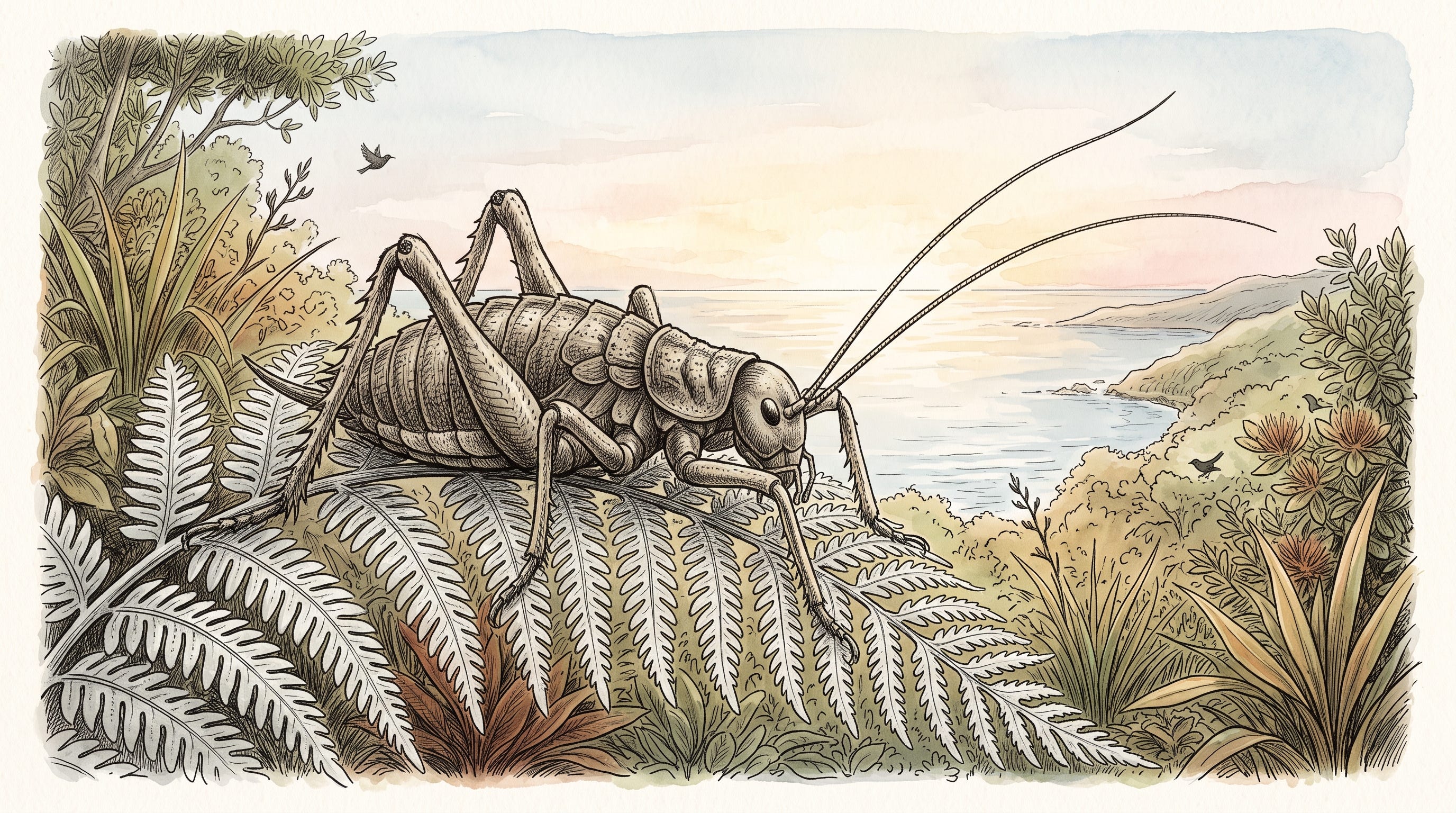
The Breakthrough: New Zealand conservation biologists confirmed that the endemic wētāpunga has officially rebounded from endangered status after more than 11,000 captive-bred giant insects were released across ten predator-free island sanctuaries. Weighing as much as a small mouse, the thriving nocturnal herbivores play a critical ecological role as gentle seed dispersers and forest floor pruners.
Sustainability Concept: Endangered invertebrate breeding, predator-free island ecology, and insect conservation.
Curriculum Alignment: NGSS 2-LS2-2 (Mimicking animal functions in seed dispersal) and 3-LS1-1 (Plant and animal life cycles).
PBL Driving Question: How do wildlife scientists breed and protect giant harmless insects on offshore islands to help them restore balanced forest floor food webs?
Visible Thinking Routine (Generate, Sort, Connect, Elaborate): Have students brainstorm initial reactions to “giant mouse-sized insects” (Generate). Sort the ideas into ecological benefits versus common human fears (Sort). Connect how island biosecurity protects gentle giants (Connect). Elaborate on how lesser-known invertebrates keep entire forests healthy (Elaborate).
From Article to Classroom Project
When you encounter a compelling environmental breakthrough, do not simply print the article and assign reading comprehension questions. Follow this four-step translation map:
Identify the Human Constraint: What specific problem did the innovators face? (e.g. Birds cannot see white spinning turbine blades against cloud cover; arboreal monkeys cannot cross roads without being hit by vehicles).
Formulate an Actionable Driving Question: Frame an open-ended design challenge using the formula: “How can we [act as role] to [solve challenge] so that [community/ecosystem benefits]?”
Anchor in Real Material Limits: Give students authentic physical constraints (materials, dimensions, budget, weather resistance) rather than asking for vague conceptual ideas.
Embed a Visible Thinking Routine: Use structured thinking prompts at formative milestones so student teams make their reasoning explicit before building final deliverables.
Copy-and-Paste Teacher AI Prompt
Copy and paste this prompt into Gemini or Claude whenever you find a news story you want to transform into an inquiry project:
I have this news article: [PASTE ARTICLE TITLE & SUMMARY OR URL]

Act as an expert Project-Based Learning curriculum designer collaborating with PBL Future Labs. Transform this news story into a K-12 PBL project brief following these strict specifications:

1. Grade Band: Specify target grade level (K-2, 3-5, 6-8, or 9-12).
2. Driving Question: Craft one open-ended, non-Googleable driving question focused on student agency, design thinking, and community impact.
3. Core Science & Math Standards: Map to 2 specific NGSS performance expectations and 1 Common Core standard.
4. Visible Thinking Routine: Select one Project Zero routine (e.g. Parts, Purposes, Complexities; See, Think, Wonder; Tug-of-War) with a step-by-step student protocol.
5. Three Guided Inquiry Milestones: Outline Phase 1 (Investigate), Phase 2 (Design & Prototype), and Phase 3 (Public Exhibition).
6. Authentic Final Product: Describe a tangible artefact students produce for a genuine audience beyond the teacher.

Do not use corporate jargon or generic educational filler. Present the output in clear, structured documentation style.
Phil