

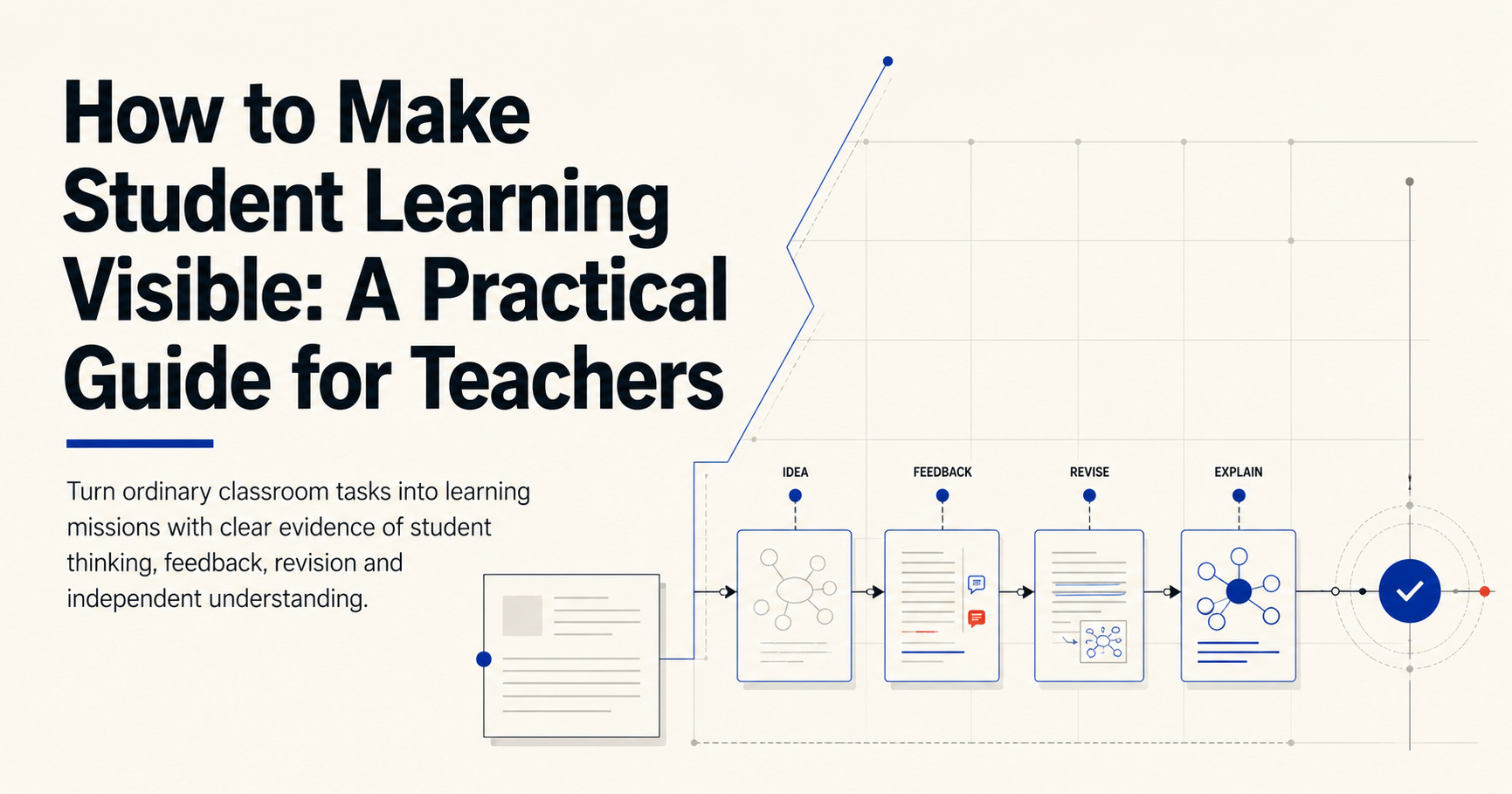
I thought I would share a workshop I am creating for Choice Charter School.
The goal of this workshop is to introduce new staff to visible thinking, and also I will include milestone assessment, and create a rich learning experience that is practical for teachers.
Link to the Google Slides I developed.
Feel free to use it and adapt it!
So, here’s how I run my workshop:
Some Phil+AI developed research (I essentially just pasted my blog into chatgpt work and asked it to help find some definitions based on what I was writing about) that I will convert:
Visible thinking matters because a correct final answer does not necessarily show how a student reached it, what they misunderstood along the way, or whether they could use the same idea again in a new context.
Metacognition is the ability to notice, reflect on and direct your own thinking. In a classroom, that means students learn to plan an approach, monitor whether it is working, explain their choices and adjust after feedback.
The Education Endowment Foundation’s evidence summary rates metacognition and self-regulation as a high-impact approach when it is explicitly taught and used well. Its estimate of impact is roughly seven additional months of progress over a year, although that figure is an average from varied studies, not a promise for any one lesson. EEF: Metacognition and self-regulation
This is where Harvard Project Zero’s Visible Thinking routines are useful. They are not magic templates and they are not an extra activity to bolt onto a lesson. They are short, repeatable structures that ask students to make a thinking move visible: observe closely, make an interpretation, support a claim, consider another viewpoint, or revise an earlier idea. That gives the teacher something to respond to while learning is still underway, and gives students language for understanding their own learning. Project Zero describes thinking routines as brief sequences of questions or steps that both reveal student thinking to teachers and help students notice and name the thinking moves they can use again. Harvard Project Zero: Thinking Routines
I don’t want staff to get lost in that definition, and I want to see if they can find it on their own, so I will just show it at the end in the reflection.
I will start with:
Learning goals
By the end, staff will be able to:
Define visible learning in practical classroom terms.
Redesign one familiar task so it produces individual evidence of student learning.
Create a small set of visible-learning non-negotiables for students.
Wicked question
How can we see enough student thinking to trust that learning has happened?
I will also include some information on Havard Visible Thinking routines.
What Is a Thinking Routine?
A thinking routine is a set of questions or a brief sequence of steps used to scaffold and support student thinking. Developed across a number of research projects at Project Zero and designed by PZers, thinking routines help to reveal students’ thinking to the teacher. They also help students themselves to notice and name particular “thinking moves”—making those moves more available and useful to them in other contexts.
I try to add a fun activity to practice the new skill.
Milestone 1: Define it
Prompt on the blank document:
Visible learning is…
“You have five minutes. Write a definition your team will use today when designing a lesson or assessing student work.”
Sentence starters:
Visible learning is when students…
We know learning has happened when we can see, hear or read…
A finished product alone does not always show…
Students make their thinking visible by…
Teachers need evidence of…
In a group task, each student should be able to show…
AI can help create work, so we also need to see…
Five minutes is a super short time, but the urgency will get brains moving. Of course, add more time as needed because this is an important part.
Then bring the group together, pull out repeated ideas, and introduce the useful distinction:
Visible learning is the evidence that lets us trust learning happened.
Visible Thinking routines from Harvard Project Zero are practical ways to make that evidence appear.
Don’t get complicated and over-teach Project Zero. Give them two or three routines they can use in the next milestone:
See–Think–Wonder
Claim–Support–Question
I Used to Think… Now I Think…
Milestone 2: Design a visible-learning experience
Challenge:
Using your group’s definition, redesign one ordinary task so every student produces visible evidence of their thinking.
Their design must include:
One clear learning goal
A meaningful student task or product
One Project Zero Visible Thinking routine
An early individual response
A decision students must justify with evidence
A feedback-and-revision point
A final individual explanation, reflection or application
The test question stays visible:
“What would we need to see, hear or read from this student to trust that they learned?”
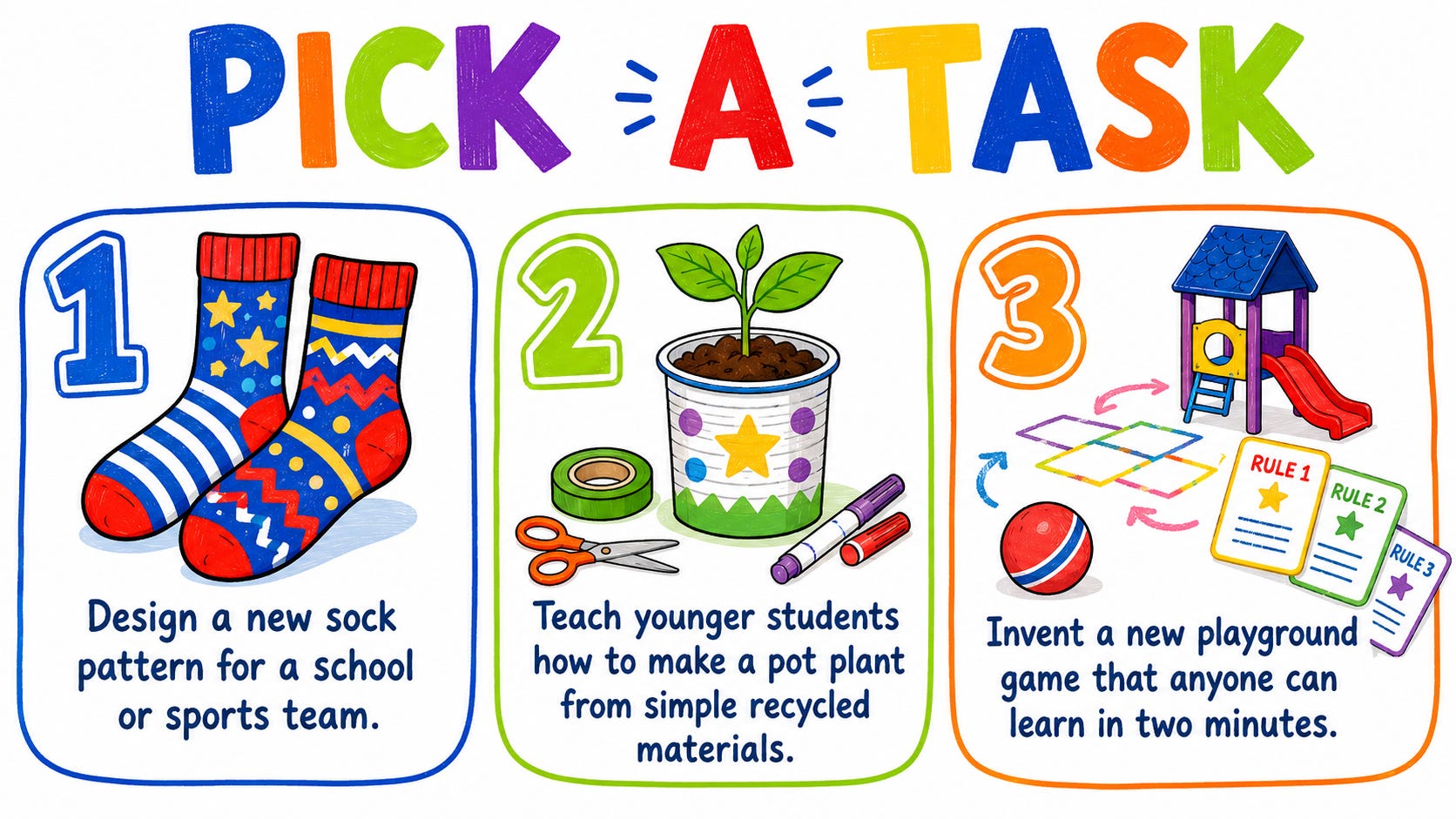
Groups can choose from:
Design a new sock pattern for a school or sports team.
Teach younger students how to make a pot plant from simple recycled materials.
Invent a new playground game that anyone can learn in two minutes.
I want this to be fun, because it shows the lesson sequence can be academically aligned and use a fun project. Remember the goal is ‘redesign one ordinary task so every student produces visible evidence of their thinking.’, how could students show evidence in the tasks above. Hopefully they are quite common, and not too complex.
Milestone 3: The Visible Learning Code
Now that staff have designed the visible-learning experience, ask them to agree on what students should be expected to do in any learning task.
I am also teaching the milestone process, we have done a lot of learning, now we must take our learning for our own classroom.
Challenge:
Create three to five non-negotiables for students that make learning visible.
Give each group a document / sentence starter titled:
In our classrooms, students will always…
They complete sentence starters such as:
check in with another student/teacher and show an early idea before submitting a final product
explain the evidence behind an important choice
use feedback to improve, rethink or defend their work
show what they changed and why
be able to explain their own contribution in group work
reflect on what they understand, what remains difficult and what they will try next
The rule is that each non-negotiable must be:
written in student-friendly language
can easily be observable by a teacher
possible across different subjects and year levels
connected to the learning experience they designed in Milestone 2
Give groups 8 minutes to create their Visible Learning Code. Then run a quick gallery walk / reflection discussion, and next steps. You want this code to evolve, as if the staff were showing it to students, it’s not set in stone, it may develop even further over the year.
Finish by combining the strongest ideas into one short shared list that students could use to help them understand it.
For example:
I show my thinking by completing visible thinking exit tickets, not only my final answer.
I use evidence to explain my choices.
I use feedback to improve or rethink my work.
I can explain what I learned and how I learned it.
In group work, I show my own contribution and understanding.
If you have any questions, please let me know, this is what we do at PBL Future Labs! phil@pblfuturelabs.com
Phil