
The Brain Doesn’t Need More Time.
It Needs a Better Learning Mission.

My co-founder Thom Markham, PhD sent me a paper this week with one line attached:
CLT is outdated and doesn’t really apply to Learning Missions in its old form. Brain is predictive. Emotional investment matters. Dynamic growth happens. The newer version is Cognitive Philosophy, not Cognitive ‘Science.’ All this actually fits Learning Missions perfectly.
The paper is by Minkang Kim, Christopher Duncan, Stanley Yip, and Derek Sankey, published in Educational Philosophy and Theory in late 2024. It mounts a full philosophical and neurobiological critique of Cognitive Load Theory, the framework most teacher education programmes still treat as settled science, and proposes something more accurate in its place. I read it alongside the research I wrote about yesterday, about interconnected assessment design. The two papers point in the same direction. And both point directly at why Learning Missions work the way they do.
What Cognitive Load Theory Actually Claims
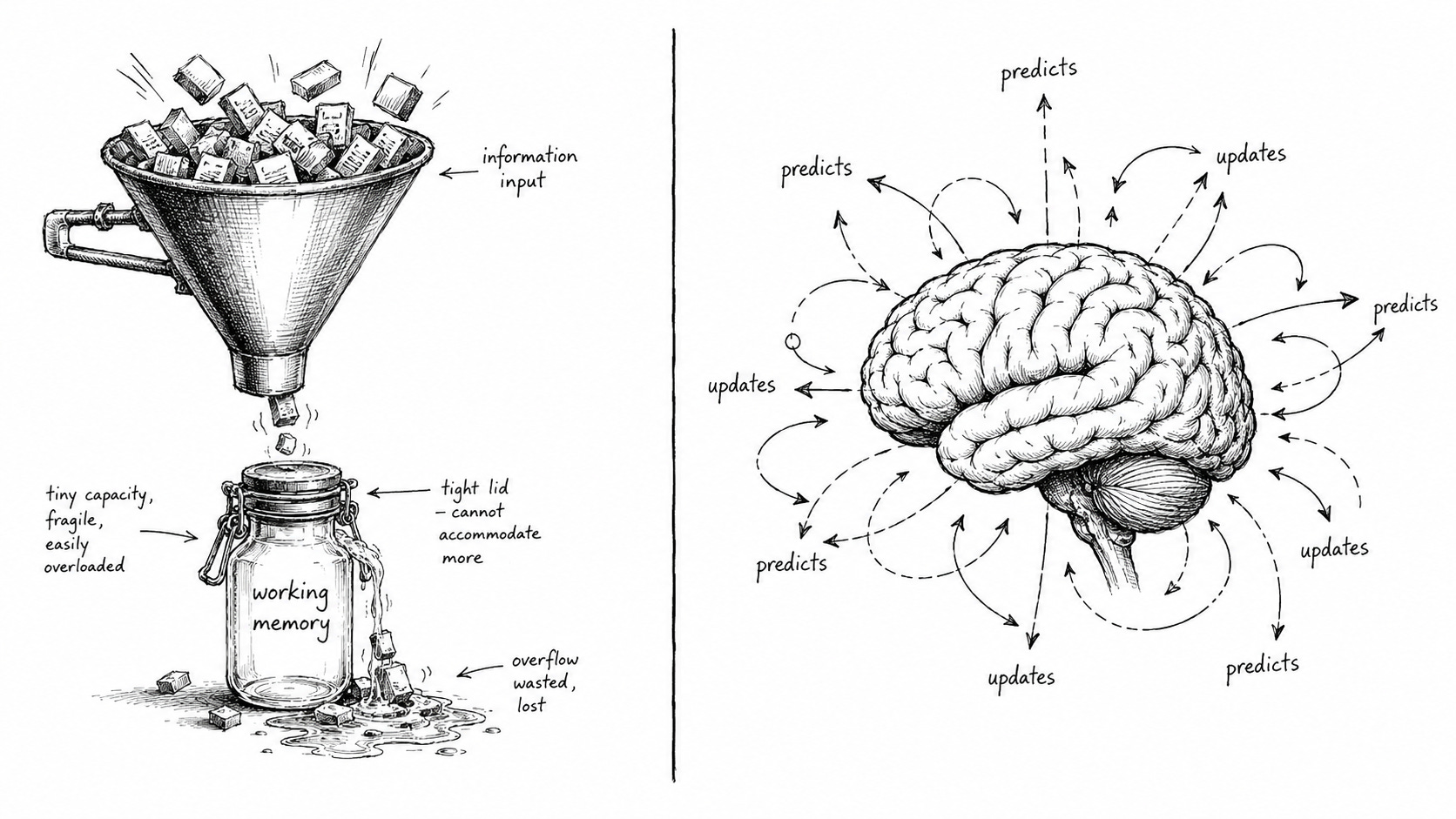
You have heard this before, probably without the name attached. Working memory is small and fragile. Overload it and learning stops. The job of instructional design is to reduce burden on that limited capacity. The teacher controls complexity so the student’s brain can absorb.
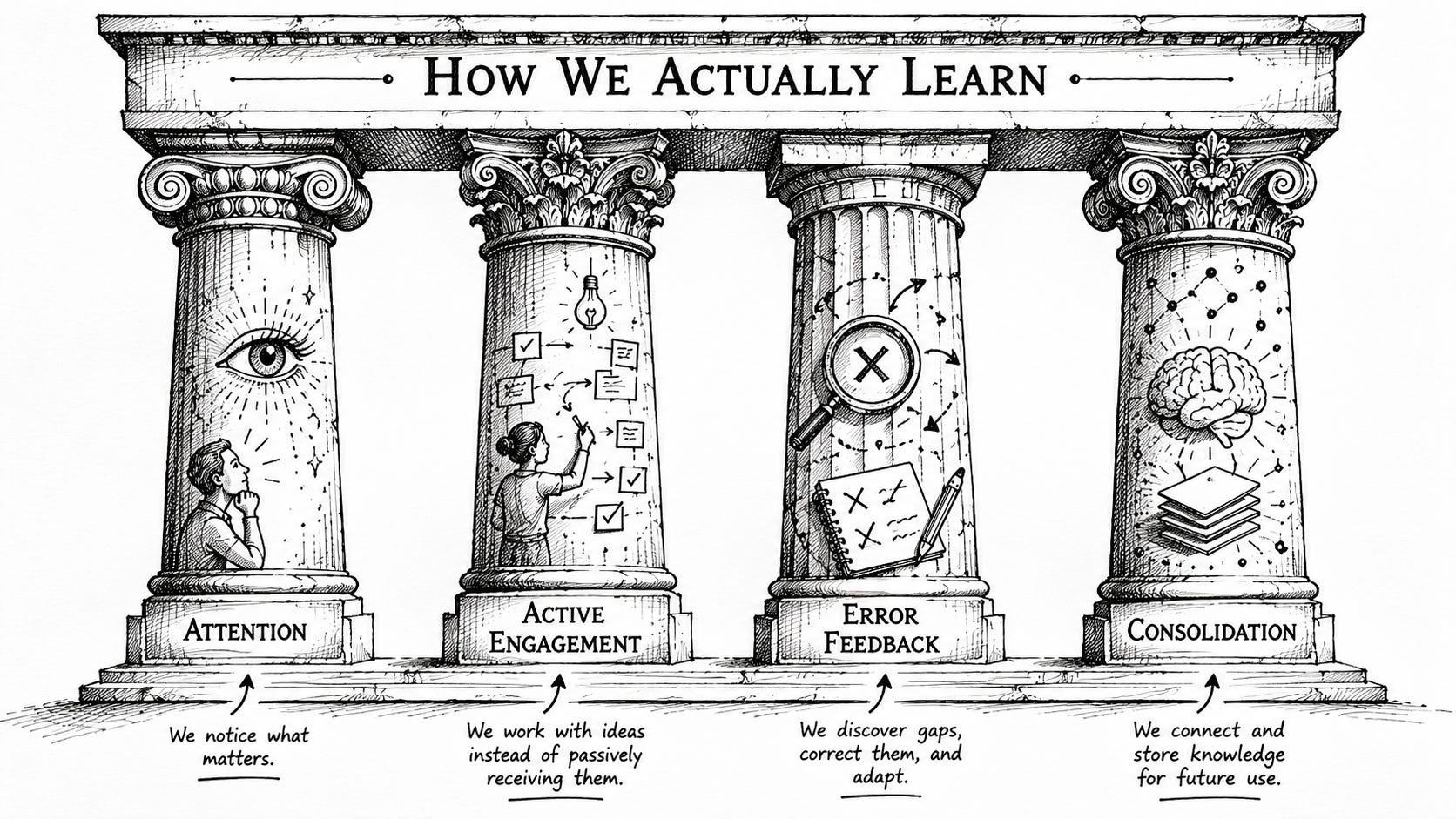
The NSW Department of Education called it the single most important thing teachers need to know. The Australian Teacher Education Expert Panel cited Sweller six times in eighteen references on brain and learning. It is everywhere.
The problem, according to Kim and colleagues, is that this model of the brain is wrong. Or at least, it is thirty years out of date.
What the Brain ‘Actually Does’
The newer account Cognitive Philosophy, drawing on neuroscientist Stanislas Dehaene, philosopher Andy Clark, and a decade of predictive processing research describes a brain that does not wait to be managed. It predicts. It is constantly generating expectations about the world and updating them when those expectations fail.
That changes the design question entirely. Under CLT, the teacher’s job is to reduce load. Under Cognitive Philosophy, the teacher’s job is to give the brain something worth predicting against, a real problem, real stakes, real feedback, a genuine reason to care about the outcome.
Dehaene identifies four pillars that learning actually requires: attention, active engagement, error feedback, and consolidation. Not cognitive load management. Attention. Investment. The experience of being wrong and correcting. Then time for the learning to stick.
The other piece Kim and colleagues raise is emotional salience. The brain’s neural plasticity, its ability to strengthen or prune connections is tied directly to value and emotional investment.
Why This Reframes Micro PBL (Learning Missions)
A Learning Mission is not a compressed version of a four-week PBL unit. That framing gets it wrong from the start.
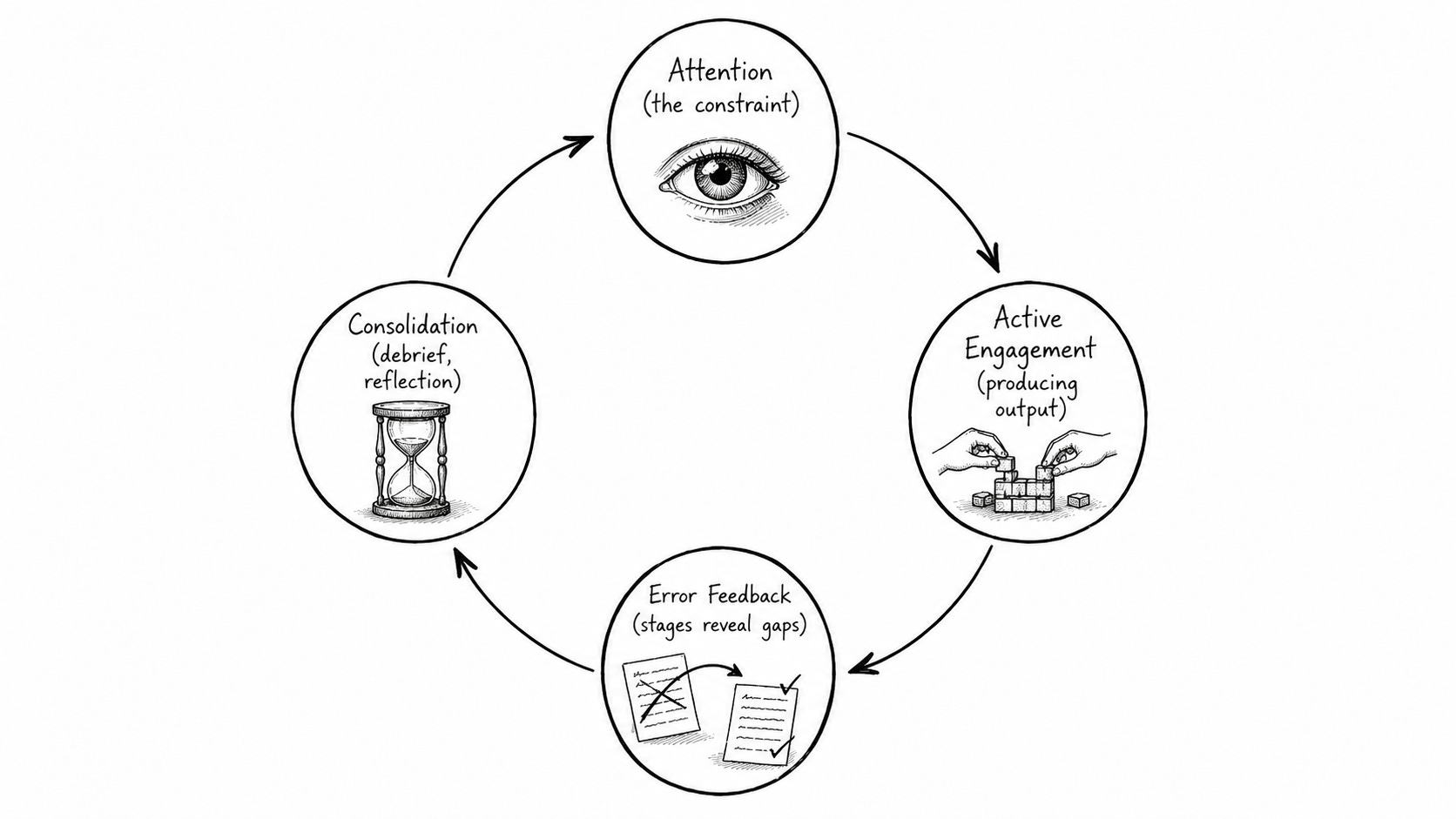
A well-designed Learning Mission is a complete cognitive loop in a single session. One learning goal. One real problem. One output that matters. The mission is engineered to hit all four of Dehaene’s pillars inside forty-five minutes or however long the session runs.
Attention is directed by the constraint. The problem is specific, the audience is real, the parameters are set. There is no open-ended drift to manage because the mission has a shape.
Active engagement follows from the design. Students are not consuming information and answering questions about it. They are producing something, a decision, a recommendation, an analysis, a prototype, using what they know.
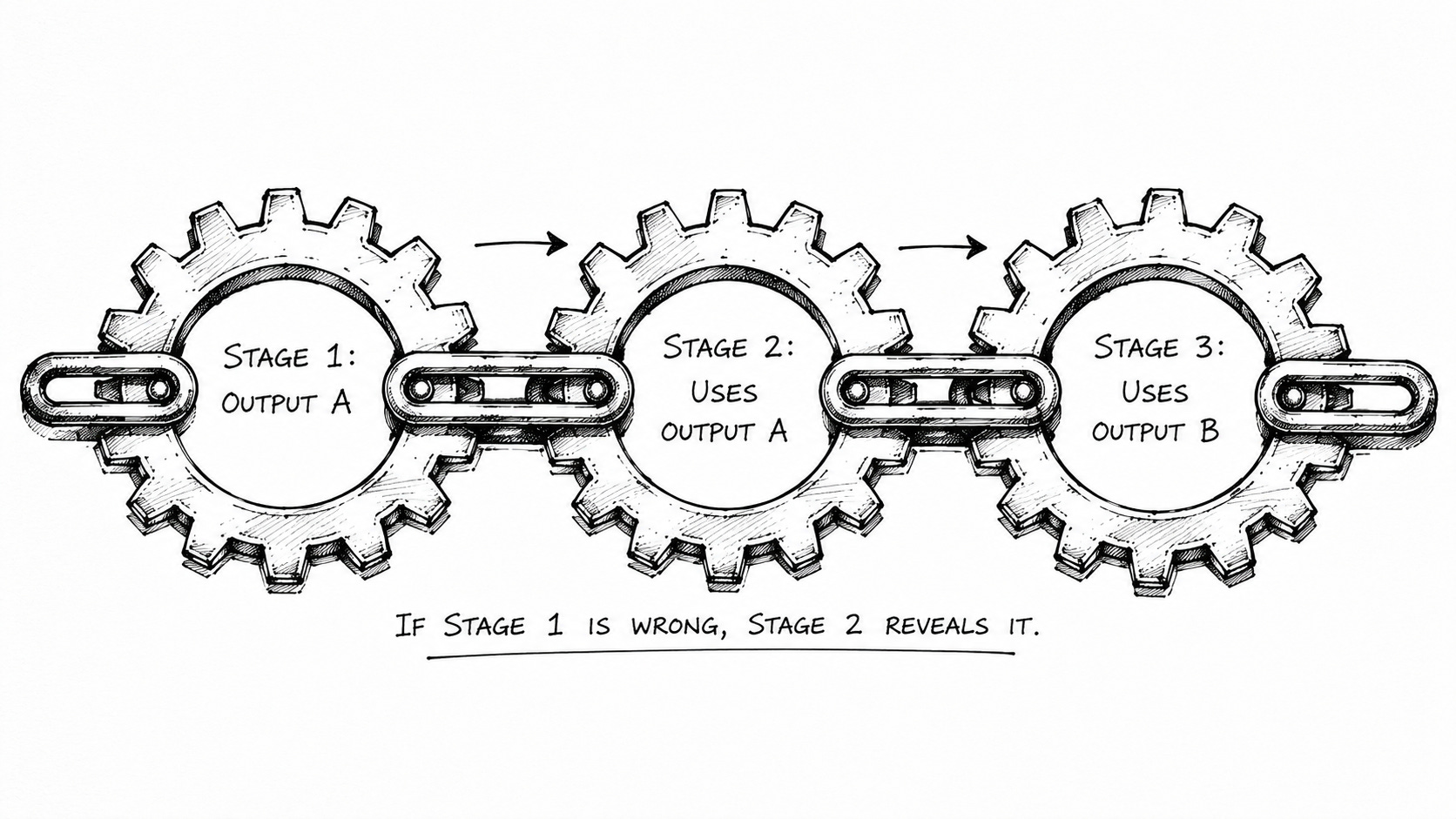
Error feedback is built into the sequence. Each stage produces an output that the next stage has to work with. If the first stage is wrong, the second stage reveals it. That is not a punishment. That is learning happening in real time.
Consolidation is what happens after. The short debrief, the reflection question, the connection to what came before. This is where the mission closes the loop.
None of that requires weeks. It requires design.
The Thing Total Freedom Gets Wrong
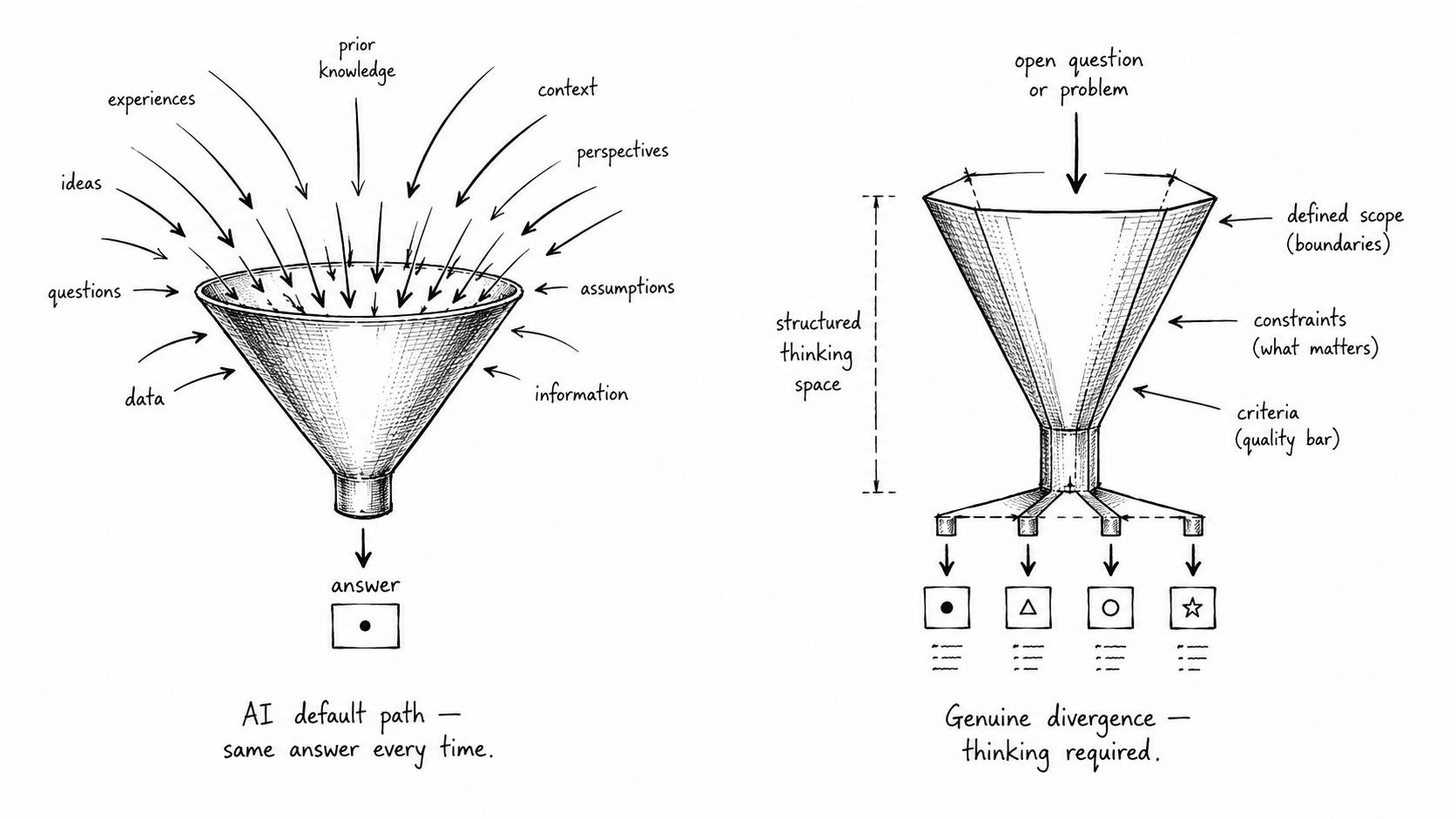
The research made a parallel point from a different angle. When students are given completely open-ended tasks, they do not produce more original work. They produce converging work, because the AI they hand the problem to defaults to the path of lowest resistance, and that path is whichever approach dominates its training data.
The Cognitive Philosophy framing explains why. An unconstrained prompt gives the brain nothing to predict against. There is no friction, no error to correct, no gap between expectation and outcome. The brain outsources the whole thing because there is nothing anchoring the task to anything it cares about.
A focused constraint does the opposite. It gives the predictive brain something to work with, a specific problem, a defined success criterion, a real reason to engage. Kim and colleagues put it plainly: the brain is not a passive receiver of instruction. It is an active predictor. Design that ignores this wastes most of what the brain can do.
The Design Principle
A Learning Mission earns its structure from this. Each mission is short and sharp because the cognitive loop it is designed to run does not need to be long, but it needs to be complete. One main learning goal generally. One sequentially dependent set of tasks. One output the student could not have produced by handing an unconstrained prompt to a fresh AI session.
The mission does not ask students to produce their best thinking across six weeks of scaffolding. It asks for their best thinking right now, on this specific problem, given what they already know and what the mission has put in front of them.
That is a different ask. It is also, neurobiologically, a more honest one.
The longer PBL unit is valuable for different reasons, project complexity, sustained collaboration, real-world iteration. But that is not the same job the mission is doing. The mission’s job is to create a complete learning experience inside a bounded time, grounded in real stakes, where the student’s actual understanding determines the output.
One Thing Worth Trying Before the End of Term
Look at an Escape Room / PBL / Design Sprint / Learning Mission you have run recently, or one you are planning.
Ask whether the student’s output at the end could have been produced without going through the mission itself. If a student could have used AI to generate the final product from the opening prompt alone, without the staged tasks, without the specific constraints, without the feedback loops built into the sequence, the mission has a gap.
Find the stage where that gap opens and add a checkpoint. Require the output of one stage to be cited explicitly in the next. Make the chain visible and load-bearing.
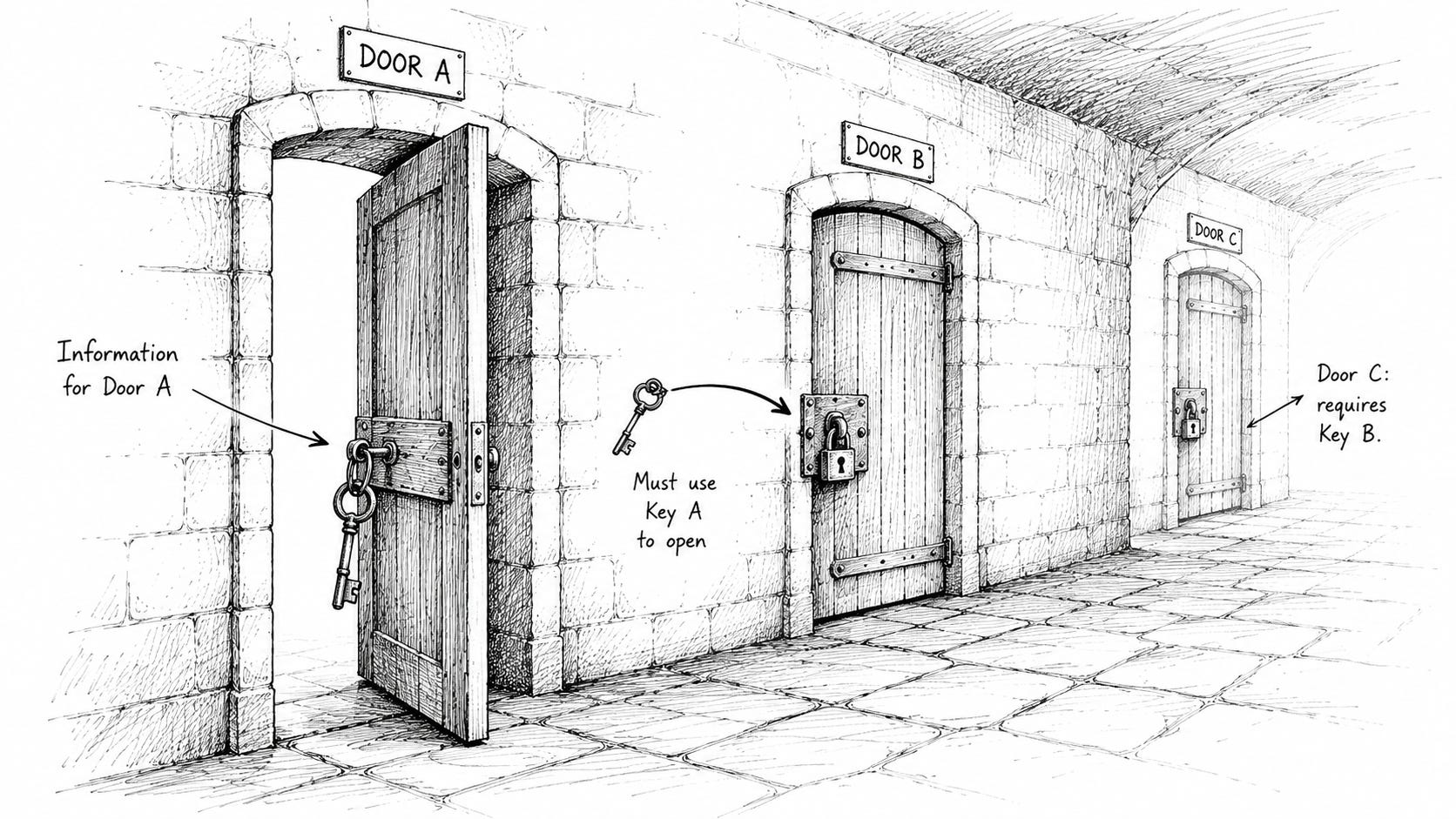
I believe that the mission’s (learning outcomes) job is to make genuine understanding necessary (like an escape room, you need the information for door a, to get to door b. If the design does not require it, the mission is not doing its job.
Phil
References
Kim, Minkang; Duncan, Christopher; Yip, Stanley; Sankey, Derek (2025). “Beyond the theoretical and pedagogical constraints of cognitive load theory, and towards a new cognitive philosophy in education.” Educational Philosophy and Theory. 57 (7): 662–673. doi:10.1080/00131857.2024.2441389.
Ding, Kaihua (2026). “Designing AI-Resilient Assessments Using Interconnected Problems: A Theoretically Grounded and Empirically Validated Framework.” arXiv:2512.10758v3. University of Pennsylvania. https://arxiv.org/abs/2512.10758.
Sweller, John (1988). “Cognitive load during problem solving: Effects on learning.” Cognitive Science. 12 (2): 257–285. doi:10.1207/s15516709cog1202_4.
Centre for Education Statistics and Evaluation (2018). Cognitive Load Theory in Practice. NSW Department of Education. https://education.nsw.gov.au/content/dam/main-education/about-us/educational-data/cese/2017-cognitive-load-theory-practice-guide.pdf.
Australian Government (2023). Strong Beginnings: Report of the Teacher Education Expert Panel. Department of Education.
Clark, Andy (2023). The Experience Machine: How Our Minds Predict and Shape Reality. Allan Lane. ISBN 978-0241662939.
Dehaene, Stanislas (2020). How We Learn: The New Science of Education and the Brain. Penguin Random House. ISBN 978-0525559887.